
80% of Companies Don't Know If ChatGPT Mentions Them
We spent years optimising for Google. But people don't search the same way anymore. And almost no one is tracking what AI says about their business.
A question that got me thinking
A few weeks ago I asked ChatGPT which branding agencies it would recommend for a mid-sized company in Spain. It gave me five names. I looked them up one by one: two had outdated websites, one had closed, and the other two were reasonably good.
It wasn't a ranking of the best. It was a ranking of the ones the model had in mind.
The world we prepared for
Over the past ten years, positioning yourself on Google meant one concrete thing: optimising for algorithms that crawl text, page speed, backlinks and structure. There were rules, tools to measure everything, and an entire industry built around the game. People knew whether they appeared on the first page, which keywords drove traffic, and when an algorithm change hit their rankings.
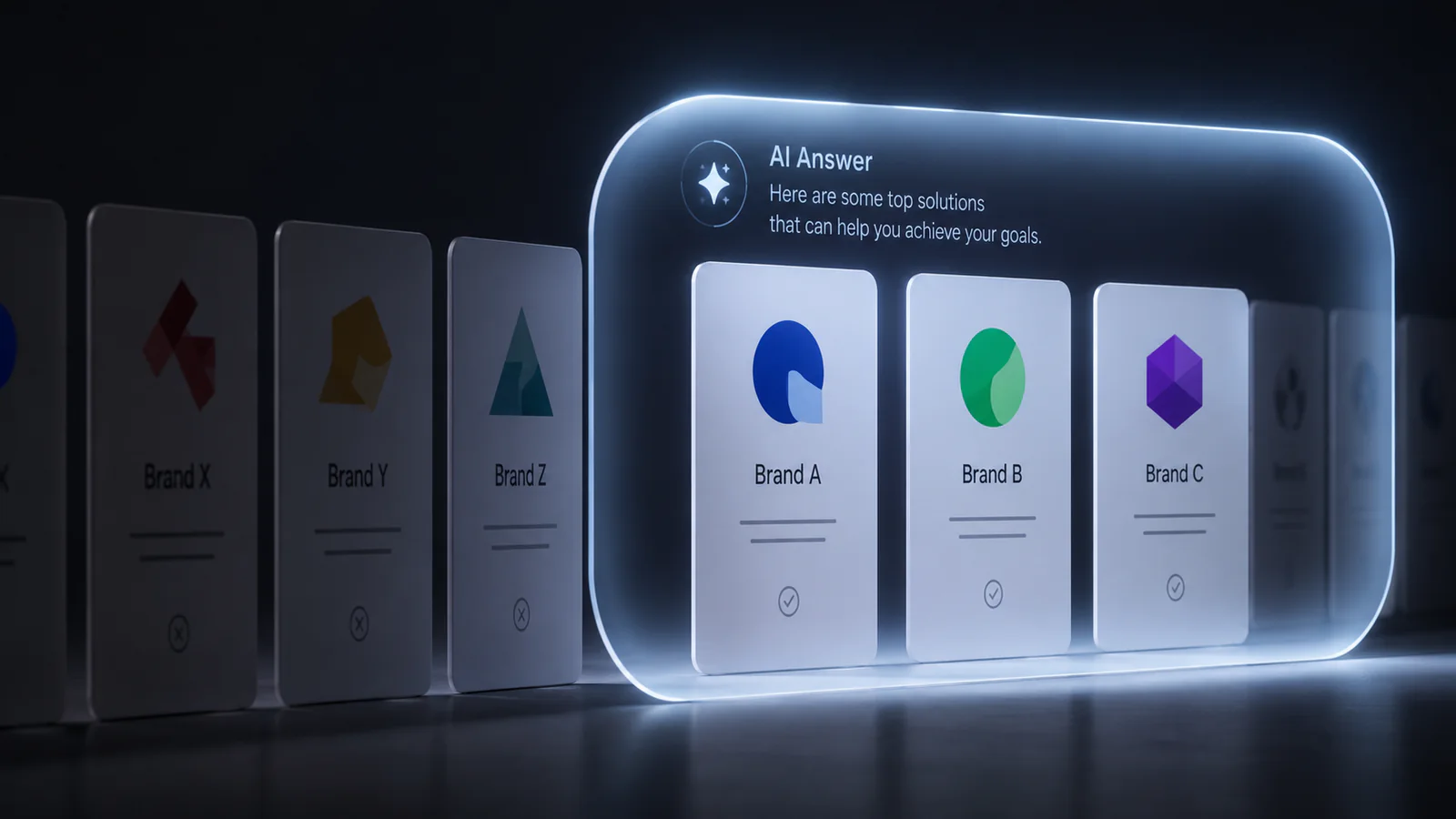
What's happening with AI assistants is different. There's no number-one position. There's no visible ranking. The AI doesn't show you results. It gives you an answer. And in that answer, you either appear or you don't.
The figure that caught my attention
Around 80% of companies don't monitor whether they appear in the responses of models like ChatGPT, Gemini or Claude. Not because they don't care, but because they don't yet have the habit or the tools to do it. It's like someone telling you in 2008 that your company wasn't showing up on Google and you saying "we don't track that."
The parallel isn't perfect, but there's something there that feels important.
What changes isn't the technique: it's the frame
What strikes me most is that this isn't a hard technical problem. It's a mental-frame problem.
Anyone who's spent time in digital marketing understands that if Google doesn't crawl you properly, you don't exist for Google. What's harder to see is that the same thing is happening with AI, but the mechanism is different. It's not just about having well-structured text on your website. It's about whether your brand appears in sources the models consider relevant, whether you're consistent in how you describe yourself, whether there's enough public, structured information about what you do and how you do it. Structured information may help, but not demonstrating authority or trust, you might want to invest your time on something else.
It's not SEO. But it's not completely different either.
A window that might not last long
Companies that did SEO in 2005 had a window of several years where ranking was far cheaper than when the game turned competitive. I don't know if the GEO window (Generative Engine Optimisation, which is what people are starting to call this) will last as long. But I do have the feeling that the people thinking about this now, even without having all the answers, will have an advantage over those who wait for a complete playbook.
I don't have a closed framework for this. Nobody really does yet. What does seem clear is that the first question is very simple: if someone asks ChatGPT about what you do, do you show up? And if you do, how do you show up?
I'd be curious to know how many companies have already asked themselves that question.
Comments
Leave a comment
Did this resonate?
Get notified when I publish something new on the blog or in resources. No spam, only when there's something worth it.
You'll get an email to confirm. You can unsubscribe whenever you want.
Related posts
Educating When Everything Feels Lost
A reflection on attention, effort, learning and resilience in a world where technology removes friction but cannot learn on our behalf.
The window is closing: OpenAI, Google and Anthropic signed the same letter on the same day
More than 100 organizations that compete with each other signed the same warning about AI-enabled cyberattacks. What it says, why now, and what it means for your company.
The best way to learn is by doing
There is no shortage of AI courses and guides, but they expire fast. Why being self-taught went from unusual to essential, and what five months at the gym taught me.
Found this useful?
If you'd like to discuss this topic at your company or event, I'd love to hear from you.
Contact me