My AI stack as of today
The AI tools I use day to day, June 2026. Why I use them, what for, and what I'd recommend for each type of person.
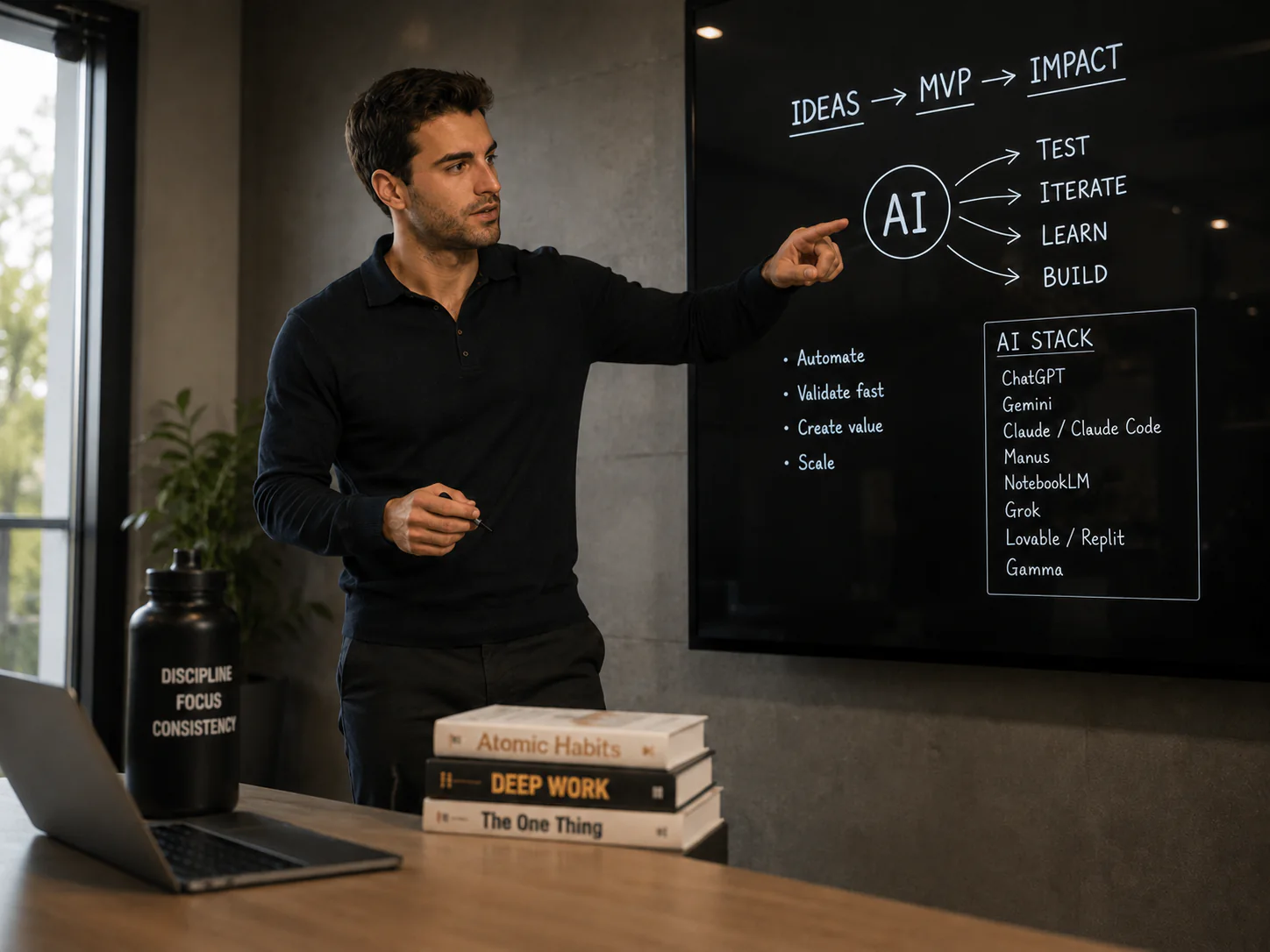
AI has been with us for almost four years since ChatGPT launched. Time has flown by. By now, I'd say practically everyone has used some kind of AI tool at least once, even if just out of curiosity. And yet there are still a lot of people who've heard about it but don't really know how to use it or get value from it.
That's why I wanted to share the tools I use day to day.
Before I start, one important note: just because I recommend a tool doesn't mean it'll be the best one for you. Like ice cream flavours or favourite foods, everyone ends up finding the tools they feel most comfortable with. You have to experiment and stick with what genuinely works for you.
ChatGPT
I've been using it for about a year and a half and, for personal stuff, it's become a really solid companion.
I use it a lot for nutrition, exercise, shopping lists, gym routines, everyday questions, and even to think through ideas that pop into my head when I have free time. It's also a fantastic learning tool.
I used to use it much more for work. Now, personally, I think it's lost some ground in that area compared to tools like Claude or Gemini.
That said, I still use it a lot for brainstorming, organising ideas, and exploring different angles. It's interesting because AI isn't fully creative (at least not in June 2026), but it can really help you generate new perspectives and break through blocks.
One last thing about ChatGPT: for image generation, it's still the best model for me. I always recommend using references, because just like a picture is worth a thousand words, a good reference makes the output much more realistic and much less obviously AI-generated.
Gemini
Another tool I use a lot is Gemini.
It has all of Google's knowledge base behind it and you really notice that when you want to find information, validate sources, or cross-check ideas. A lot of people call it Google on steroids, and I think that's pretty accurate.
I use it a lot to discover podcasts, books, YouTube videos, experts, newsletters, and interesting content for professional learning.
I actually bought a book recently that Gemini recommended entirely on its own. I'll let you know how it goes, but what it's recommended so far has been genuinely good.
It's also really useful when I want to research a topic before going deeper, or when I'm looking for product recommendations.
Claude and Claude Code
When it comes to professional productivity, probably the tool that impresses me most right now is Claude, especially Claude Code.
I think it's currently one of the most powerful tools for programming, app development, and building websites.
In fact, the foundation of this website you're reading was built with AI. I've been customising and improving it ever since, but the initial structure came from these tools.
What I love most about Claude Code is that it lets you turn ideas into something tangible very quickly. Having an idea is great, but what really matters is being able to build it, test it, show it to people, and validate whether it actually has potential.
I haven't developed any product I'm selling yet using Claude Code, but I use it constantly for internal projects. If you're a bit technical, or just curious, it can genuinely surprise you with what you're able to build. It takes patience, a willingness to experiment, and enthusiasm for learning, but it's absolutely worth it.
Lovable, Replit and Manus
If you're not especially technical, I'd probably recommend starting with tools like Lovable or Replit. They let you build apps and MVPs quickly without needing much programming knowledge.
I also use Manus quite a bit. It's a kind of AI agent that I find really useful when I already have a strategy or idea and want to pressure-test it. I often use it to validate hypotheses, spot potential weak points, or just get a second opinion before moving forward.
If you're clear on what you want to build, it can also help you develop apps, websites, or run more detailed analyses.
Other tools I use
I also use Grok, from X. I find it useful for stress-testing ideas, trying different angles, or validating MVPs.
NotebookLM is another one I think is great. I use it mainly to summarise very long reports, research PDFs, or documents that run into hundreds of pages. We don't always need to read everything: often we just want the key points to decide whether it's worth going deeper. That said, always being aware that summarising comes with its own risks.
NotebookLM also lets you generate podcasts, summaries, and infographics, which makes consuming complex information much easier.
For presentations I've also used Gamma quite a bit, though lately I lean more towards Gemini or NotebookLM.
My recommendation
As of today, 25 June 2026, these are the tools I use most.
Probably the best advice I've heard is: don't fall in love with any one AI tool. The pace this field moves at is so fast that the tool that seems best today might not be in a few months. Maybe ChatGPT will overtake Claude again tomorrow. Or Gemini releases a huge update. Or something completely new comes along.
That's also why I don't think you need to use twenty different tools. Use the ones that are genuinely useful to you. If that's twenty, great. If it's ten, also great. And if three tools cover everything you need, even better.
In the end, it's not about having the biggest stack: it's about having the one that works best for you.
Hope this was useful. And if you use a tool you think is worth trying, I'd love to hear about it in the comments.
Take care.
Comments
Leave a comment
Did this resonate?
Get notified when I publish something new on the blog or in resources. No spam, only when there's something worth it.
You'll get an email to confirm. You can unsubscribe whenever you want.
Related posts
Educating When Everything Feels Lost
A reflection on attention, effort, learning and resilience in a world where technology removes friction but cannot learn on our behalf.
The window is closing: OpenAI, Google and Anthropic signed the same letter on the same day
More than 100 organizations that compete with each other signed the same warning about AI-enabled cyberattacks. What it says, why now, and what it means for your company.
The best way to learn is by doing
There is no shortage of AI courses and guides, but they expire fast. Why being self-taught went from unusual to essential, and what five months at the gym taught me.
Found this useful?
If you'd like to discuss this topic at your company or event, I'd love to hear from you.
Contact me