There's No Perfect AI: What Really Matters Is Starting to Experiment
I've been learning about AI for a year and a half, and what's taught me the most wasn't any course or any specific model, it was the simple act of experimenting.
I've been fully immersed in the world of artificial intelligence for a year and a half now, and what still fascinates me most isn't any particular tool or specific model, it's the sheer amount of things you can do with all of this once you actually start exploring without fear of getting it wrong.
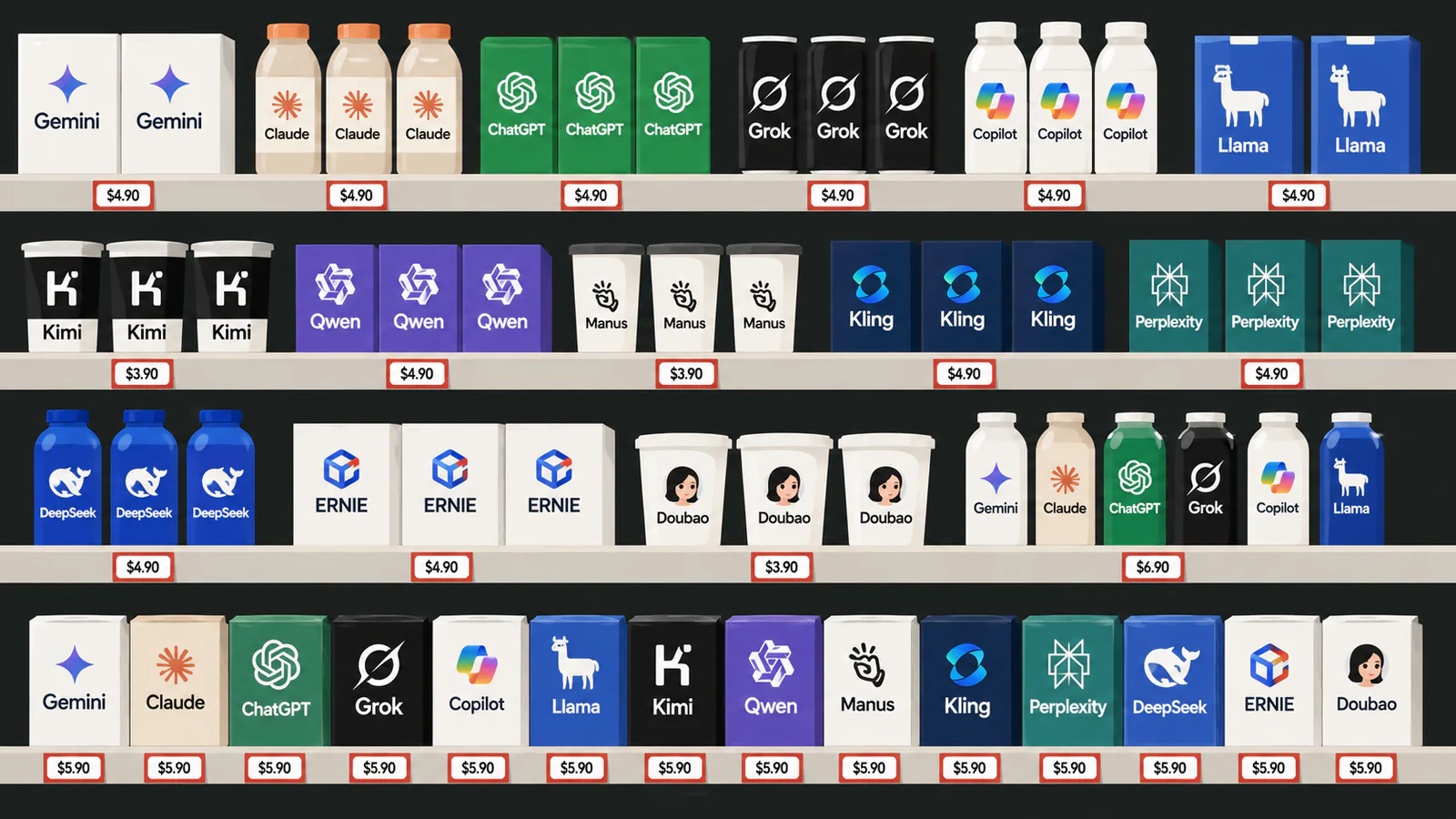
One of the first questions I asked myself when I started learning, and that people still ask me constantly, is the classic one: which AI is best for this or that? It's understandable, because at first the landscape seems endless and you need some kind of starting point. You ask someone who knows, they give you their opinion, and often that person is right, but plenty of other times they don't have to be, not because they're a bad professional, but because we're at a point where the only way to know which tool works for you is to try it yourself.
The question nobody can fully answer
I think we're at a point where there's no objective, universal answer to "which AI is the best," and that's not a problem, it's an invitation. Models evolve every week, updates change behavior overnight, and whatever works best for generating narrative text today might not be the most interesting option next week. That's why I think you have to form your own opinion by trying things, and there's no better time to do it than now, when access to these tools is easier and cheaper than ever.
I'm not talking about building something like SpaceX, which recently went public and changed quite a few things in the aerospace sector. I'm talking about much smaller, more concrete things: testing something at work, trying out an idea you've been turning over for a while, or simply using AI to get better organized in your personal life. Those small experiments are what actually teach you how all of this works, and they do it in a way no article or course can replicate.
A detail worth keeping in mind
There's something I think is worth mentioning, not to scare anyone but to keep in mind: when you use a language model as a conversational tool or for personal development, it's good to know that its natural tendency is to agree with you more often than it pushes back, because deep down it's designed to keep the interaction positive and smooth. That doesn't make it a bad tool, but it does mean you have to bring your own judgment, a well-formed question, and the ability to question the answers you get.
With that in mind, what you can do with an LLM in terms of learning and personal development is genuinely remarkable: you can turn over ideas you have in your head that you've never quite been able to put into words, you can see a problem from angles you hadn't considered, you can fill knowledge gaps when you're starting out in a new area where you don't yet have enough experience to know what to ask. I think of it a bit like Duolingo, but for any topic, with the difference that it's fully adaptive to you: the clearer you are about what you want to learn, build, or improve, the better it can adjust to what you need and give you a real starting point.
What you learn without realizing it
Something I've noticed over these months developing my own ideas and projects, even though none of them have turned into a business or generated real income so far, is that the process of trying things teaches you a whole range of things you never planned to learn. It's not just AI you learn: you learn to structure ideas, communicate them more clearly, iterate when something doesn't work, be more patient with processes that take time to pay off. And all of that stays with you, even if the specific project doesn't go anywhere.
I think people willing to test even something small, to use their creativity to improve something concrete, whether for themselves, someone close to them, or even a client, are going to build up a kind of knowledge you don't get just by reading about the topic. And the ones who don't, even if they're up to date on every piece of industry news, are eventually going to notice they're missing something that's hard to get any other way.
There's no perfect tool for everyone
On which model to use: Claude Code seems like an incredible tool to me for coding, building apps and websites, but if you don't have a technical background, you might find it more useful to start with Lovable, Replit, or Bolt, platforms built for creating viable products without needing to know how to code. None of those options puts you behind the others, they just give you a different focus, and what matters is validating ideas and learning along the way.
Beyond specific tools, the main players right now are Anthropic, OpenAI, xAI, Google with Gemini, and the Chinese models, which have been getting pretty solid. But more important than knowing all those names is understanding that everyone communicates, thinks, and works differently, and that affects which tool is going to feel most natural and productive for them. What works for me doesn't have to work for you the same way.
Where to start if you don't know where to start
My recommendation is the simplest and least glamorous one possible: start with something you already need to do or are already interested in, without trying to learn AI just for the sake of learning AI. If you've been wanting a more structured workout routine for a while, ask a model to help you design one. If you want to track what you spend on groceries each week, use it for that. If you have a business idea you've been mulling over for months, start developing it in conversation with the tool and see what happens.
It might sound trivial, but once you try it with something that actually matters to you, the experience changes quite a bit. It's a bit like traveling somewhere new: at first you don't quite know how everything works, but once you get into the rhythm, you start seeing the possibilities. And instead of googling how to do something, you explain to the model what you want to achieve and let it help you get there your own way.
That, to me, is what this is all about.
If you're struggling to take the first step, maybe the problem isn't the tool: I talk about this in the real risk today is not experimenting.
Comments
Leave a comment
Did this resonate?
Get notified when I publish something new on the blog or in resources. No spam, only when there's something worth it.
You'll get an email to confirm. You can unsubscribe whenever you want.
Related posts
Educating When Everything Feels Lost
A reflection on attention, effort, learning and resilience in a world where technology removes friction but cannot learn on our behalf.
The window is closing: OpenAI, Google and Anthropic signed the same letter on the same day
More than 100 organizations that compete with each other signed the same warning about AI-enabled cyberattacks. What it says, why now, and what it means for your company.
The best way to learn is by doing
There is no shortage of AI courses and guides, but they expire fast. Why being self-taught went from unusual to essential, and what five months at the gym taught me.
Found this useful?
If you'd like to discuss this topic at your company or event, I'd love to hear from you.
Contact me